Weight loss is often reduced to one sentence: eat less and move more.
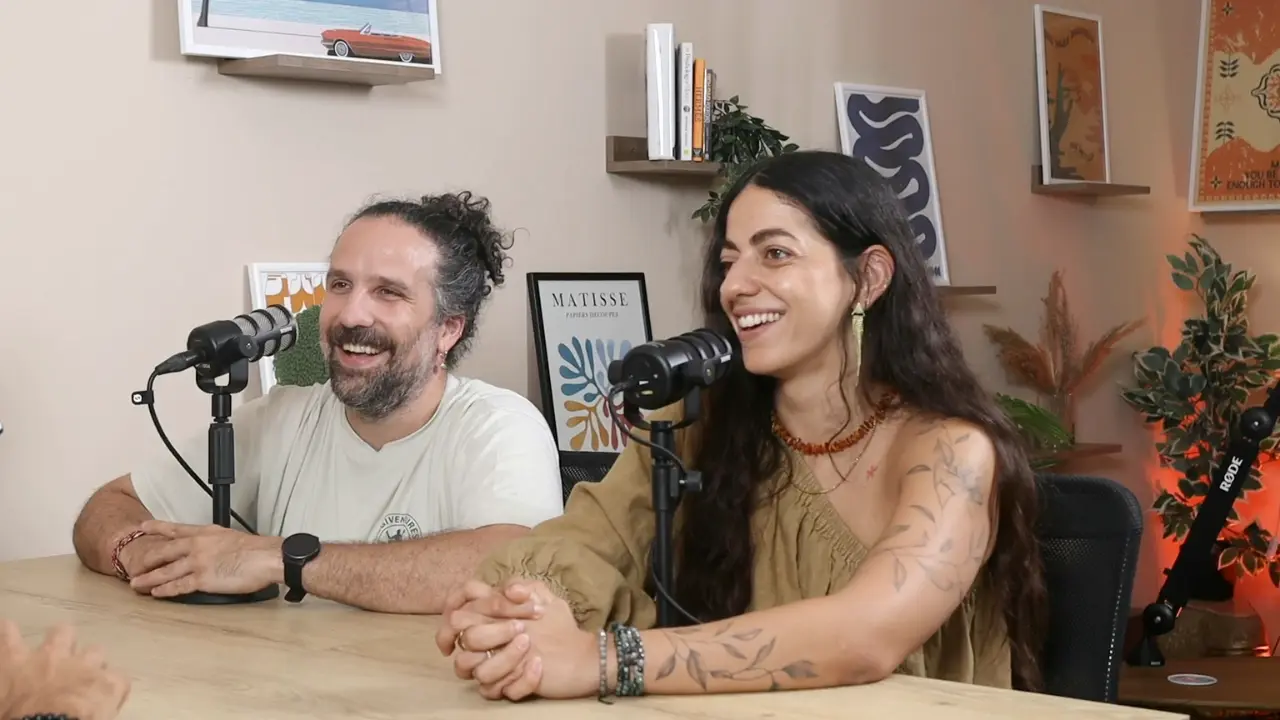
In this episode of The Weigh In by Journable, nutritionist Rebecca Labaki explains why that advice can be incomplete, especially for people dealing with blood sugar issues, insulin resistance, PCOS/PMOS symptoms, chronic stress, poor sleep, gut health problems, or stubborn cravings.
Rebecca does not dismiss calories. In fact, she makes it clear that energy balance still matters. But her point is that calories are only one part of the picture. Food quality, macros, meal timing, cortisol, insulin, gut health, and the person’s biology can all change how sustainable a plan feels and how the body responds.
This article is for educational purposes only and is not medical advice. Speak with a qualified healthcare professional before making changes related to medical conditions, medication, or treatment.
Rebecca Labaki is the nutritionist behind Re.Nutrify. She has a background in clinical and public health nutrition, with additional specialization in diabetes.
That background led her deeper into insulin resistance, blood sugar management, PCOS, hormonal health, and gut health. In the episode, Rebecca explains that these topics are connected. A person may come to the clinic wanting to lose weight, but the assessment often uncovers issues with sleep, stress, digestion, blood sugar, hormones, food quality, or lifestyle structure.
Her approach is practical: understand the body first, then build habits that fit the person’s real life.
Rebecca says one of the biggest obstacles she sees is the assumption that eating less will automatically solve weight loss.
Many clients come to her after already reducing calories aggressively. In those cases, she may need to explain that eating more strategically can sometimes support better results. That does not mean eating without structure. It means giving the body enough energy, enough protein, the right macro balance, and enough food quality to support metabolism, training, hormones, and day-to-day function.
Steve pushes on this point because it sounds counterintuitive. Rebecca clarifies that she is looking at the person’s needs, activity level, calories, macros, food quality, and how the diet affects gut health and energy.
The point is not “calories do not matter.” The point is that calories alone are not enough context.
Rebecca describes weight loss as more detailed than simply assigning someone a calorie number.
Calories are part of the foundation. Macros matter because protein, carbohydrates, and fats affect recomposition, training, satiety, and energy. Food quality matters because it affects the gut, micronutrients, and how someone feels throughout the day.
She gives a simple example: 200 calories of chips versus 200 calories of avocado. They are equal in energy, but they are not equal in how they affect the body. One may be easier to overeat and less filling. The other may provide more nourishment and support satiety differently.
This is where Rebecca’s “not all calories are equal” message comes in. The calorie number matters, but the source of those calories also matters.
Rebecca explains gut health in plain language. The digestive tract runs from the mouth down, but in the clinic, she often focuses on the colon and the bacteria living there.
She describes a balance between “good” and “bad” bacteria. When someone eats more nourishing foods, they support the bacteria they want more of. When the diet is heavily ultra-processed, that balance can shift in the wrong direction.
In Rebecca’s view, gut health can influence far more than digestion. She connects it to skin, brain health, mental health, sleep, blood sugar, and weight loss.
The practical takeaway: food quality matters because it shapes the internal environment your body has to work with.
Rebecca strongly pushes back on the idea that the 80/20 rule means “80% strict, 20% cheating.”
She does not like the word “cheat” because it creates a moral framework around food. It can make people feel like they are either being perfect or failing. That all-or-nothing thinking can make consistency harder.
Instead, Rebecca describes the 80% as the foundation: nourishing foods, gut health, blood sugar awareness, and enough structure. The 20% is not a failure. It is part of living a real life, especially in a culture where food is social.
In other words, 80/20 is not permission to binge. It is a framework for sustainability.
Rebecca explains insulin as the hormone that helps move sugar from the blood into the cells. Insulin is necessary. Every time we eat carbohydrates, insulin plays an important role.
The concern is not that insulin rises. The concern is repeated sharp spikes and crashes.
Rebecca gives examples like starting the day with sugar, eating sugar at the beginning of a meal, or grazing randomly throughout the day. Over time, she says this can make blood sugar feel more unstable and can contribute to cravings, belly fat concerns, and the feeling that weight loss is not responding the way someone expects.
Her practical message is not “never eat carbs.” It is: understand how your meals affect your blood sugar, energy, cravings, and hunger.
Rebecca discusses PCOS and why she believes the conversation is moving beyond just cysts on the ovaries.
She explains that some people may not show cysts on an ultrasound but still experience symptoms such as acne, hair changes, belly fat accumulation, cravings, stubborn weight, and difficulty losing weight. Because of this, she frames the condition as broader than the ovaries alone, involving hormones, metabolism, insulin, inflammation, and overall health.
For people living with PCOS/PMOS, Rebecca emphasizes blood sugar management, cortisol management, training that does not drive excessive stress, and meal timing. She also cautions against overtraining and blindly following high-intensity trends when the body may already be under stress.
One of the strongest themes in the episode is the combination of undereating, overcaffeinating, training hard, and sleeping poorly.
Rebecca says she sees this often in the clinic, with weight plateau as a common complaint. When the body is under chronic stress, she explains, it can shift into a protective state. In that state, cravings can rise, sugar cravings can become stronger, and late-night eating can become harder to control.
Her suggested morning rhythm includes calming the nervous system, avoiding immediate phone use when possible, getting sunlight, hydrating, eating breakfast, moving, and delaying caffeine until after food.
Again, this is not presented as a rigid prescription for everyone. It is an example of how she thinks about reducing stress load.
Rebecca also talks about peri-workout fueling: what someone eats before and after training.
She emphasizes that the right workout depends on the person and their metabolic state. For people who are already inflamed, stressed, or dealing with PCOS/PMOS, high-intensity training may not always be the best default.
For post-workout nutrition, Rebecca pushes back on the idea that protein alone is always enough. She explains that protein and carbohydrates together can support recovery and glycogen replenishment after training.
Rebecca mentions that she uses Journable with patients to help them understand macros, calories, and what their meals are actually made of.
For many people, "macros" feel abstract. Taking a photo of a meal and seeing its calories, protein, carbs, and fats turns nutrition into something concrete. Rebecca says this helps clients learn what they're eating and gives them more flexibility in real life.
Instead of only following a fixed meal plan, they can understand their targets and make better decisions when eating out, at a birthday, or adjusting meals on the fly.
Watch the full episode here on YouTube | Spotify | Apple Podcasts.
If Rebecca's point about making macros concrete stuck with you, that's the idea behind Journable — snap a photo of your meal and see the calories, protein, carbs, and fats behind it, so you can make a better call whether you're eating out or adjusting on the fly. Check your macros with Journable.
You can also connect with Rebecca on Instagram at @re.nutrify
Steve Hoyek:
Today I’m joined by Rebecca Labaki, the nutritionist behind Re.Nutrify.
Rebecca is an experienced nutritionist who also creates content around topics that are not heavily understood by people, including gut health, insulin resistance, PCOS, newly known as PMOS, blood sugar management, and all the wellness trends that keep showing up in our feeds.
What I appreciate about her approach is that it’s not just factual, but also practical. It’s about understanding your body, building better habits, and learning how and what to eat in the real world.
So today we’re going to cut through the noise. Rebecca, welcome to The Weigh In.
Rebecca Labaki:
Thank you for having me.
Steve Hoyek:
Pleasure. Rebecca, can you tell us a bit about yourself, what you do, and your background?
Rebecca Labaki:
Yes, sure. As you said, I’m a nutritionist. I have a specialty in clinical and public health, and then I went ahead and did a specialty in diabetes.
That opened a lot of doors for me because, being specialized in diabetes and insulin resistance, it plays a big role in many other hormonal conditions, including PCOS, now known as PMOS.
Then I obviously stemmed into gut health because, at the end of the day, it’s a holistic approach. We need to look into these two important parts, from blood sugar to gut health. These together help me understand nutrition and help other individuals understand themselves better.
Steve Hoyek:
Interesting. As a nutritionist, what do people come to you for? Is it mostly weight loss, or are there other factors at play or other objectives that people come to you with?
Rebecca Labaki:
Mostly, they come for weight loss. But then when we’re at the clinic, and we’re discovering and assessing the weight problem, we tend to find other issues, whether it’s gut, blood sugar management, stress, unhealthy sleep architecture.
Initially, they come with that chief complaint, but then once we start digging in, we look into a lot more.
Steve Hoyek:
Interesting. From your experience and what you’ve seen with your clients, what’s the number one obstacle to attaining a healthy weight?
Rebecca Labaki:
The number one obstacle is assuming that eating less is going to help them lose weight.
A lot of the individuals I see who are living with hormonal conditions or blood sugar management conditions come to me initially with a very low calorie intake.
This is one of the biggest obstacles I face, where I tell them, “Less is not better. Eating more is going to get you to lose the weight.”
This is something I do struggle with, and I do end up having a bit of a back-and-forth with patients. I tell them, “Trust me, eating more is going to get you to lose the weight.”
Steve Hoyek:
This is the most counter-conventional wisdom thing I’ve heard. When you say eating more, are you talking about more in volume? Like eating more leafy greens and lettuce and less high-calorie-density foods? What exactly are you saying?
Rebecca Labaki:
When we talk about food, we talk about calories just as much as we talk about macros. They’re both just as important.
Once we look into the needs of the individual and how much they work out, we give them the calorie intake that they need, but we also pay attention to the macros.
Macros, meaning carbs, protein, and fat, are what will help them recompose.
So yes, volume matters. Calorie intake matters. The quality of the food matters too, because it impacts both gut health and the vitamins and minerals that give them the energy to feel better.
Steve Hoyek:
Okay, interesting. You mentioned a couple of things here. Let’s zoom out and then double click back on this. What approaches or methods are there to losing weight, and which one do you recommend to your clients?
Rebecca Labaki:
There are many methods. We’ve heard of a lot of trends, from one meal a day to the carnivore diet to all sorts of things. The detox juice cleanse is also still lingering for some reason.
There’s no one method that fits one person.
I believe in looking into rehabilitating the metabolism. From there, we look into calorie intake, then macros, then blood sugar management, and finally gut health.
When I say gut health, I mean the quality of the food they’re taking.
It’s not just, “You’re on a 1,700-calorie diet and that’s it.” It doesn’t stop there. There’s so much more detail to it.
But yes, of course, energy in and energy out is the basis of nutrition.
Steve Hoyek:
Let’s talk about gut health and elaborate more on this. What exactly is the relationship between the health of someone’s gut and the foods they eat or their energy levels throughout the day?
Rebecca Labaki:
To make it simpler, when we say gut health, your gut is all the way from your mouth all the way down, the whole digestive tract.
But when we say gut health in the clinic, we’re talking about the colon itself and the bacteria that are living there.
We have a group of bacteria. To simplify it, they’re split into good and bad.
The more we eat foods that nourish the good bacteria, the healthier your gut. The more we eat foods that are ultra-processed, the Western diet approach, the more we mess with the bacteria and increase the bad bacteria.
That’s what we call dysbiosis, an imbalance between the good and the bad.
Once you have a good balance with the bacteria, once the good bacteria outweigh the bad bacteria, that’s where you see an impact on the skin, brain health, mental health, sleep, blood sugar, and weight loss.
The environment in your gut is basically one of the most important parts of health. It all stems from there.
Once your bacteria are happy and releasing happy hormones or digestive chemicals, that’s when you’re going to see it impact the rest of your body.
Steve Hoyek:
Interesting. So by the same token, not only does the gut and gut health impact weight loss and weight management, but also mental health and emotional state. Is that true?
Rebecca Labaki:
Of course. Eighty percent of your immunity is in your gut. There’s also a nerve that connects your gut to your brain. We call that the vagus nerve.
The healthier your gut, the healthier your brain, and vice versa.
Steve Hoyek:
Interesting. A client comes to you and tells you they just want to be healthier, or they want to eat or live healthier. What do you recommend? What do you tell them to do? Where do they start?
Rebecca Labaki:
That’s where I start. I look into everything from their blood tests to their medical diagnosis, any surgeries they’ve done before, family history, social history, whether they drink or smoke, their food recall, how they’re eating, their sleep architecture, their bowel movements, whether they’re constipated, their caffeine intake, and what time they’re having caffeine.
Once I look into each of these aspects, the patient and I sit together and customize a plan that works for them while tackling every single red flag.
At the end of the day, it’s about looking at the biology of the person, teaching them what that means, and then talking about the goals, whether it’s weight loss or something else.
Steve Hoyek:
It seems like there’s quite a lot of information and factors at play. What if someone is new to this whole space and really just wants a simple playbook? “I want to start eating healthier or being healthier. Where do I start?” Do they really need to think about a thousand and one things, or is there a simple three-step playbook you would give someone?
Rebecca Labaki:
There are basics, but I don’t like to generalize. I like to customize because it differs from one patient to another.
There is general advice, or the top three.
Sleep well. By sleep well, I mean sleep before midnight and get seven to eight hours of sleep if possible.
Try to look for foods that are less processed. Try to lean more toward a Mediterranean diet.
Don’t have late dinners. Try not to go into late-night eating.
These are the basic three tips, but I like to give very specialized advice.
Steve Hoyek:
You mentioned the 80/20 rule in some of your content on Instagram. Can you tell us a bit about that?
Rebecca Labaki:
A lot of people think the 80/20 rule is about cheating. So 20% is the cheat meal. I hate this. It’s not about cheating.
You shouldn’t be using this word anyway, the whole “cheat meal” thing, because it makes you feel like you have the right to indulge now. And when you don’t, you have to be healthy to a T.
That’s what makes people relapse, so to speak, and not continue or sustain their diet.
The 80% is about giving your body all the nourishing ingredients it needs so that when you have that 20%, when you have that cookie, you’re not going into systemic inflammation and going back to square zero.
The 80% is building a base where you have nourishing foods, you’re thinking about gut health, you’re thinking about blood sugar, and all of that.
The 20%, which we all want to enjoy because going out is what we do in Lebanon, is on its own. We don’t want to stop people from being out and being social.
But we want a strong base so that once we have that good cookie, we’re not just going back to square zero immediately.
Steve Hoyek:
Why is it that all of the tastiest and most indulgent foods in the world are unhealthy? Why isn’t it the case that our bodies naturally learned to love healthy food and our taste palates developed to love the healthiest, most nutritious food?
Rebecca Labaki:
Our palates are built to love tasty food. However, we were fooled by the engineering side of food technology, where they know exactly what ingredient to include, whether it was processed ingredients, refined oils, sugars, or additives.
These are very well studied and engineered for us to be addicted to foods and to enjoy them that much.
Each one of the ingredients included in unhealthy foods is made for us to increase the happy hormones and for us to want more.
If we think about ultra-processed food, think about a bag of crisps. Once we ingest it, it goes into our stomach very lightly. It’s not taking a lot of volume in our stomach, so we get hungry quickly.
That’s in regard to volume versus something fibrous, like a bowl of salad. The way a bowl of salad or vegetables fills your stomach is very different from the way a bag of chips does.
Also, there is the impact on blood sugar. This can be applied to the calorie concept.
A lot of people tell me it’s just about calories. But I want to ask you if a 200-calorie bowl of chips is the same as 200 calories of avocado.
Yes, they’re the same in calories, but the way they impact your body is completely different. One is going to give you cellular nourishment, and the other is going to crash your energy and make you hungry later.
So yeah, it’s not all our fault.
Steve Hoyek:
This leans into something I’ve heard you mention online, which is that not all calories are equal, right?
Rebecca Labaki:
Exactly.
Steve Hoyek:
What are some common signs that someone should steer away from traditional or conventional approaches to weight loss, like dieting or counting calories, and look more into hormones or gut health?
Rebecca Labaki:
What I tend to see in the clinic is when they attempt a calorie deficit and fail at it, or they feel like their body is plateauing.
Also, symptoms. If they feel like they have strong PMS, like being very moody before their period, brain fog, weight gain specifically on the belly, stubborn fat, messy periods, moodiness — all of this is where you have to question.
It’s not just about calories in and calories out. I need to look into the architecture of my gut, my blood sugar, my hormones, reproductive hormones, insulin, and all of that.
Steve Hoyek:
Let’s talk about cortisol and cortisol management. What happens when someone is undereating, overcaffeinated, training hard, and sleeping poorly? What happens in their body?
Rebecca Labaki:
I see this a lot in the clinic, and the chief complaint is, “My weight is plateauing.”
We’re not built to overtrain and undereat. When we are in that state, our body is in a chronic stress state.
Cortisol is good when it increases acutely, on a short-term basis. It gives you adrenaline and that push.
But when you’re in a chronic stress state and cortisol is high for too long, your body goes into protection mode. That means, “Let’s stop everything. Let’s focus only on keeping this individual alive.”
The body thinks we’re in a famine state, in drought in the desert. It pulls down the metabolism. It says, “Forget about the period, forget about the thyroid, forget about muscles. Just keep this person alive.”
In today’s world, we’re not actually sitting in drought and famine. We’re overtraining and undereating, but our body reacts as if we are.
So we don’t see the results. The first sign of this is weight plateau.
When we’re in a chronic stress state, we’re not even thinking clearly about what we want to eat because insulin is also being affected. Cortisol and insulin can go up together.
What that means is my need for sugar, cravings for sugar, late-night eating, and improper choices increase when I’m in a chronic stress state.
You want to do unhealthy habits because of the biology behind it.
Steve Hoyek:
You’ve told me before that some of my habits spike my cortisol. For example, upon waking, I fast until midday. I don’t have any food or calorie intake. I drink lots of water and black coffee in the early hours of the morning.
If someone wants to manage cortisol levels better, even if it’s not related to a specific objective, what recommendations would you give?
Rebecca Labaki:
I’ll tell you how I start my day and how that impacts my cortisol levels. Maybe this can inspire someone else.
It’s all about calming the nervous system and not keeping up with today’s world, whether it’s Instagram or waking up and scrolling first thing in the morning.
Wake up in the morning and try not to look at a screen. Try to use meditation apps or some sort of prayer for the first 10 minutes. Calm your nervous system. Learn some breathing techniques.
Go outside and see the sun for a good 10 to 15 minutes. Get in your water.
After tongue scraping and oral health, then comes water. After water, you can get in a pinch of sea salt, Celtic salt, or electrolytes, just to calm the adrenal glands and stress glands.
Then it’s breakfast, some sort of movement, and then coffee 30 minutes later.
This morning routine, on its own, is one of the best for calming cortisol.
Then comes the rest of the day. When you’re at work, we’re all in fight or flight. We’re all on the run because that’s how it is these days.
Just pause if possible. Give yourself two minutes of breathing, calming your nervous system, and then get back into today’s world.
Obviously, avoid late-night eating because insulin and cortisol come together.
At night, when the sun goes down, melatonin goes up. Melatonin is the sleep hormone. When the sleep hormone goes up, insulin comes down.
It’s not that the apple changes in calories during the day versus at night. It’s that your insulin does not work as well when the sun is down.
When insulin is spiking and not storing the fat where it should, it can store it more in belly fat, and then cortisol goes even higher.
Steve Hoyek:
So you can eat the same foods in the morning or at night and they can have a different impact on your body?
Rebecca Labaki:
Yes, simply because of insulin. As soon as melatonin goes up and insulin sensitivity goes down, the response of insulin to carbohydrates changes.
That’s where belly fat accumulation becomes higher, and you’re also less active.
Steve Hoyek:
What would you recommend then? What should someone focus on eating in the morning versus afternoon versus evening?
Rebecca Labaki:
I’m going to specify this advice to individuals living with PCOS.
It is recommended that these girls eat the majority of their calories, 60 to 70%, before the sun sets and have a big breakfast or a 30-gram protein breakfast in the first 90 minutes of waking up.
After 6 or 7 p.m., when the sun sets and insulin goes down, we can have a rush of cortisol, belly fat accumulation, cravings for more, and the cycle keeps going.
Steve Hoyek:
What is PCOS? Can you tell us more, and why is it recently known as PMOS?
Rebecca Labaki:
It was polycystic ovary syndrome. By its name, it sounds as if it is only focused on cysts.
The issue is that only some girls show signs of cysts on ultrasound. A doctor would usually do the ultrasound, see no cysts, and say you’re good to go.
This is why we’re hearing more of PMOS, because there was misdiagnosis and now we’re learning more about it.
Today, it’s called polyendocrine, meaning hormones outside the reproductive hormones; metabolic, meaning metabolism and cardiac health; ovarian, because the ovaries are still involved; and syndrome, because it’s not just one thing. It’s a basket of features or symptoms.
Now we are getting better at diagnosing PCOS or PMOS because we understand it’s not just about cysts. It could simply be symptoms of acne, hair changes, belly fat accumulation, cravings, and inability to lose weight as easily as others.
We’re happier because now we’re not just looking at the ovaries. In order to help individuals with PCOS, we have to look at them holistically.
Steve Hoyek:
If someone does have PMOS, what does this mean for weight loss? What approach works for them? What conventional approaches should they steer clear of?
Rebecca Labaki:
When we talk about PMOS, we immediately talk about cortisol and insulin with it.
We try to manage that. We try to eat in ways where we’re managing insulin levels through blood sugar management.
We also try to control workouts. When an individual is living with PMOS, she should not be overtraining. She should not be doing high-intensity interval training. She should not be leaving her workout feeling like she’s out of breath, overtraining, and her veins are going to pop out.
There are certain features for these individuals where we try to dampen the inflammation that PMOS does in their body. Then we go into supplements, blood tests, and all the others.
Steve Hoyek:
Let’s talk about insulin spikes. We often hear online that you shouldn’t spike your insulin, you shouldn’t have carbs first in your meal, or first thing in the morning.
Can you tell us about insulin spikes and whether they really are all that bad?
Rebecca Labaki:
Let’s understand what insulin is.
Insulin is basically in charge of getting sugar into the cells. As soon as we eat carbohydrates, any source of carbohydrates, they are digested as sugar in our blood.
Then insulin comes out from the pancreas and says, “It’s time for all the sugars to go from the blood into the cells and to pack them up.”
We need insulin. Every time we eat carbs, we need insulin to tidy them up and not keep them in the blood.
However, when we say spike as a rush of insulin, everything that goes up very quickly will crash down very quickly. That’s where the issue lies.
If we are shocking our system with sugar first thing in the morning, sugar at the beginning of our meal, or random snacking, we are triggering insulin to increase quickly.
A lot of individuals tell me, “I don’t eat meals, I just snack.” They wake up, open the fridge, have chocolate, then two hours later have a fruit, then two hours later something else.
When we do that, we trigger insulin to increase again and again.
With time, when you keep triggering insulin, its response may become too fast, too slow, or delayed. That can affect cravings and belly fat, and then you get stuck in that loop.
The reason we care so much about insulin is because we need it to store our sugar, but we need to be careful how it’s being secreted.
If we keep triggering it over time, we may see that its reaction to carbs is not the way we want. Then the collateral damage is, “Why am I not able to lose weight? Why is it stubborn on my belly? Why am I craving so much sugar and can’t control it? Why am I eating less than you and gaining weight?”
Steve Hoyek:
Everyone is born different, and different approaches work for different people.
Is this also the reason why sometimes after a very carb-heavy dinner, you wake up the next morning feeling famished, like you could eat a cow?
Rebecca Labaki:
Exactly. It’s not applicable to everyone. But if there is already a predisposition for metabolic disorder, or someone has visceral fat, meaning fat around the organs and especially the pancreas, and they build habits like late-night eating or heavy carb meals, insulin may already be a bit messy.
It rushes to increase and then crashes. You wake up in the morning, your blood sugar is so low that you just want to eat the whole fridge.
Steve Hoyek:
And we sometimes do.
Rebecca Labaki:
Yeah, we sometimes do.
Steve Hoyek:
Let’s talk about myths. There are many health and wellness myths going around. What’s one health and wellness myth that frustrates you beyond comparison?
Rebecca Labaki:
Plant milks.
Steve Hoyek:
Plant milks. Tell us more.
Rebecca Labaki:
There was a whole trend of staying away from cow dairy and anything from animal dairy and sticking to plant milk.
Sure, almond milk is great. Coconut milk is great. But if we compare the whole almond squeezed into almond milk versus the store-bought ones that are ultra-processed, that’s different.
With store-bought almond milk, it can be a small percentage of almond and the rest water, vegetable oil, gums, preservatives, and additives.
These individuals are saying, “Let’s stay away from cow dairy because it causes acne,” and then sticking to store-bought plant milks that may be doing more gut-disrupting impacts than cow dairy does.
Steve Hoyek:
Different topic. I’d love to know your perspective on training. We’ve been talking about nutrition, gut health, and hormones. How does all of this fit in with any form of training?
Rebecca Labaki:
The most important thing is peri-workout fueling.
The type of workout matters, and where you are metabolically really matters. You don’t want to spike inflammation through high-intensity interval training if that is not right for you.
Peri-workout fueling means eating the right things before and after training in order to fuel muscle recovery, muscle growth, and help you get to your goals.
Pre-workout ideas would be fast sugars two to four hours before, or even 30 minutes before if feasible.
Post-workout is very important. A lot of people tell me they take purely protein after a workout. Post-workout needs to be both protein and carbs together.
Carbohydrates are going to store glycogen, which is stored in the muscle and gives you that pump. Within the first hour of finishing your workout, your muscles are warmest to absorb those nutrients, so a combination of both protein and carbs matters.
Steve Hoyek:
When it comes to workouts, we also hear a lot about protein online. Everyone is obsessed with high protein. Let’s say someone is new to tracking nutrition and wants to start learning more. Where can they start?
Rebecca Labaki:
What I’ve been doing in my clinic, because of advancements with AI, is taking advantage of the fact that it exists.
At first, when I tell patients “macros,” they’re like, “This is Chinese to me. What are macros? What are proteins? What are fats?”
So I give them an application called Journable. Journable is an AI-generated calorie counter. My patients take pictures of their food, and the macros of the food come up.
Once I give them their total daily calorie needs and total daily macros, they set them up in Journable and start taking pictures of their meals.
They understand how much protein and carbs each meal is made of and whether they are reaching their total needs per day.
That is when they start to understand it on their own.
A one-hour consultation and seeing my patients every two weeks is not going to give them the full nutrition education package. This helps a lot because they start seeing, “Rebecca, I never knew I used to eat this little carbs,” or “I didn’t know this had this much protein,” or “I was actually eating more than I need.”
Steve Hoyek:
Amazing. We’ve seen this as well. The educational aspect of it, and the simplicity of being able to understand what you’re eating with just a couple taps or a picture of your food, goes a long way.
Education plays a huge role in someone’s ability to hit their goals, lose weight, manage health better, and do so sustainably.
Rebecca Labaki:
There’s one more thing it helps with.
At the end of the day, the dietitian gives six or seven meal options. But where is the flexibility in that? What if I’m invited to a friend’s birthday? What do I eat if there’s no sourdough, avocado, and eggs for breakfast?
With Journable, I give you how many calories and macros you need, not only per day but per meal.
When you’re out and about, you take pictures of your meals and can ask Journable to prepare a meal made up of these macros and calories. This offers more flexibility to the individual.
Steve Hoyek:
Amazing. Love it. Thanks for sharing that.
Rebecca, I want to move on to what we call The Protocol, where we learn more about you, your habits, and your perspective.
First question: What is your morning routine? The first 60 to 90 minutes, no filter.
Rebecca Labaki:
Because I’m living with PMOS, I need to be careful about calming my nervous system in the morning.
As I mentioned, I wake up and try not to look at my screen. Sometimes we’re human. Sometimes all I do is grab my phone and continue working, answer voice notes, and answer WhatsApps.
I try not to do that as much as possible. I keep my phone away from me.
I try to meditate or pray a little bit, go out in the sun, see my dog, walk around with him, and take my two Brazil nuts for thyroid health.
Before that, I take care of my oral health. I do tongue scraping, oil pulling, and brushing my teeth.
Then comes water intake. With the water, I could take a pinch of salt on my tongue, Celtic salt, sea salt, or electrolytes.
Then the Brazil nuts, then the walk outside in the sun with the dog, then breakfast.
After breakfast, I wait 30 minutes to stop caffeine from impacting iron absorption from my food, and then I have my matcha.
If I have my matcha, I make sure to have it with 100% monk fruit that doesn’t spike my blood sugar, 100% almond milk, a dash of 100% pure vanilla extract, and I’m ready to go for the rest of the day.
Steve Hoyek:
What is, in your opinion, the most overrated thing in health and fitness right now?
Rebecca Labaki:
Over-supplementing.
Nobody should be taking more supplements than nutrients from their meals. Supplements are complementary to food.
The way we ingest supplements, what they do in our body, and how they are disseminated in the body is different from food itself. Food comes with fibers, vitamins, and minerals.
Over-supplementing, especially with individuals living with PMOS, is everywhere. Take inositol, take berberine, take chromium. Then you see people with so many supplements that are probably redundant, while their food is wrong and contradicting everything.
Customizing supplements to a person’s needs is so important, not just taking something because someone online said to take it.
Steve Hoyek:
What’s the most underrated thing in health and fitness?
Rebecca Labaki:
Ten-minute walks.
We’re seeing individuals online doing calf raises after meals. Our calves are like our second heart. They are one of the most sugar-absorbing muscles in the body.
The reason we say to walk 10 minutes after a meal, or do calf raises after a meal, is because it helps stabilize blood sugar. It doesn’t shock your body with the flow of sugar.
You feel better and lighter when you sit down 10 minutes later instead of going to bed right after.
Please walk 10 minutes after. It’s just 10 minutes. It doesn’t have to be about wearing running shoes and going outside. You can simply do dishes or errands around the house. That is 10 minutes on your feet.
Steve Hoyek:
Just some movement.
Rebecca Labaki:
Just some movement.
Steve Hoyek:
Movement after a meal is countercultural to what we have here in Mediterranean culture, where you just sit down for hours after a meal.
Rebecca Labaki:
I see it at home. I’m done with lunch. Nobody bother me. It’s time for bed. It’s siesta time.
Steve Hoyek:
You mentioned the calves are the second heart. What did you mean by that exactly?
Rebecca Labaki:
They’re one of the largest muscles and one of the most sugar-absorbing muscles in the body. They also pump a lot of blood in your body.
Steve Hoyek:
So if I wanted to grow my calves, I should eat lots of sugar?
Rebecca Labaki:
That’s not how it works.
The way to grow your calves is to do lower-body workouts and do the post-workout fueling right after.
Steve Hoyek:
Rebecca, what’s the best advice spreading online at the moment?
Rebecca Labaki:
Right now, it’s the fact that PCOS changed its name to PMOS.
I’m loving this. I’m loving the trend. I’m loving how aware people are becoming and that they’re understanding more and more that it’s not just about going for an ultrasound and stopping there if there are no cysts.
I’m seeing that a lot. After that, there can be years of PMOS playing in the body, and then it’s, “Rebecca, please save me. I’m not feeling good. My weight is plateauing.”
The best thing happening recently is that girls are starting to understand that it’s not just about cysts and ovaries.
Steve Hoyek:
Your answer about your morning routine was quite spot on. It seems like everything goes very smoothly, but we’re human, and we have guilty pleasures. What’s yours?
Rebecca Labaki:
Having a nice glass of wine with my family.
There are zero benefits to alcohol. Not one drop of alcohol does any good to your body. Forget the whole thing about wine and heart health. Zero benefits of alcohol.
But this is my guilty pleasure because there is a lot of social aspect to it. There is love behind it. There is sitting in community with friends and people you love.
We do this often in Lebanon. We go out for a drink. We go out for good food.
I wouldn’t call it guilty pleasure because it’s my 20%.
I make sure I’m taking care of my gut health 80% of the time. My foods are intact. I’m not eating ultra-processed food. I’m being careful. I’m reading ingredients, not in a fixated or obsessive way, but in an awareness way.
So that 20% is good to go.
I wanted to let you know that we’re human. My morning routine might seem robotic, but the way I convince patients to take care of themselves is by teaching them their biology.
If I sit in the clinic and just tell them, “Do this and do that because I told you so,” it won’t get them anywhere. They will eventually relapse and not sustain it.
Once I sit with the individual and teach them the biology and therapeutic education behind metabolism, what it means not to spike blood sugar, and what could happen if they do certain things, then they’re more than happy to apply the tips and sustain them.
Steve Hoyek:
Rebecca, just before we land, what’s one thing you’d like to leave the audience with today?
Rebecca Labaki:
I’d like to leave my audience, especially the ones living with insulin resistance, PCOS, or metabolic disorders, with this: do not blame yourself too much, and don’t think this is a lack of discipline or willpower.
Biology plays a big role in this.
If you feel like your cravings are getting higher and your weight is becoming more stubborn, don’t blame yourself. Investigate the biology, and then we can talk about the rest.
Steve Hoyek:
Amazing. How can the audience reach you or best connect with you?
Rebecca Labaki:
My Instagram is the easiest way to speak to me: @re.nutrify. They can shoot me a DM, and I’ll be more than happy to help them.
Steve Hoyek:
Rebecca, this was awesome. Thanks for coming on.
Rebecca Labaki:
Thank you.